|
|
|
|
Enabling Members to do Better Business in Defence
|
|
|
|
|
|
|
Welcome to the first ADA Defence update for 2025!
We would like to wish all our members a very Happy New Year. We hope your new year is filled with fresh opportunities and milestones. We look forward to another year of collaboration and networking.
|
|
|
|
|
|
|
Opportunities for SMEs in the defence industry will continue to grow and we are here to help and advocate for our members.
We would also like to hear from you if you have any news or stories about your business that may be of interest to other businesses and organisations.
We look forward to hearing from you.
mailto:info@australiandefencealliance.org.au
|
|
|
|
|
New Australian Cyber Security Centre Head Appointed
Ms Stephanie Crowe has yesterday been appointed as the new Head of the Australian Signals Directorate (ASD) Australian Cyber Security Centre (ACSC).
The ACSC is the Australian Government’s technical authority on cyber security. It provides an avenue for organisations large and small to partner with Government and adopt a security framework to protect their information technology and operational technology systems, applications, and data from cyber threats.
Ms Crowe has an extensive background in cyber security having worked across government and industry to respond to nationally-significant cyber events and strengthen Australia’s cyber defences.
Over her 15-year career at ASD, Ms Crowe has held a number of key roles in signals intelligence and cyber security, including leading ASD’s technical advice and assistance programs for industry and building ASD’s cyber threat intelligence capabilities.
Today’s announcement follows the recent appointment of Ms Abigail Bradshaw CSC as Director-General of the Australian Signals Directorate.
|
|
|
|
|
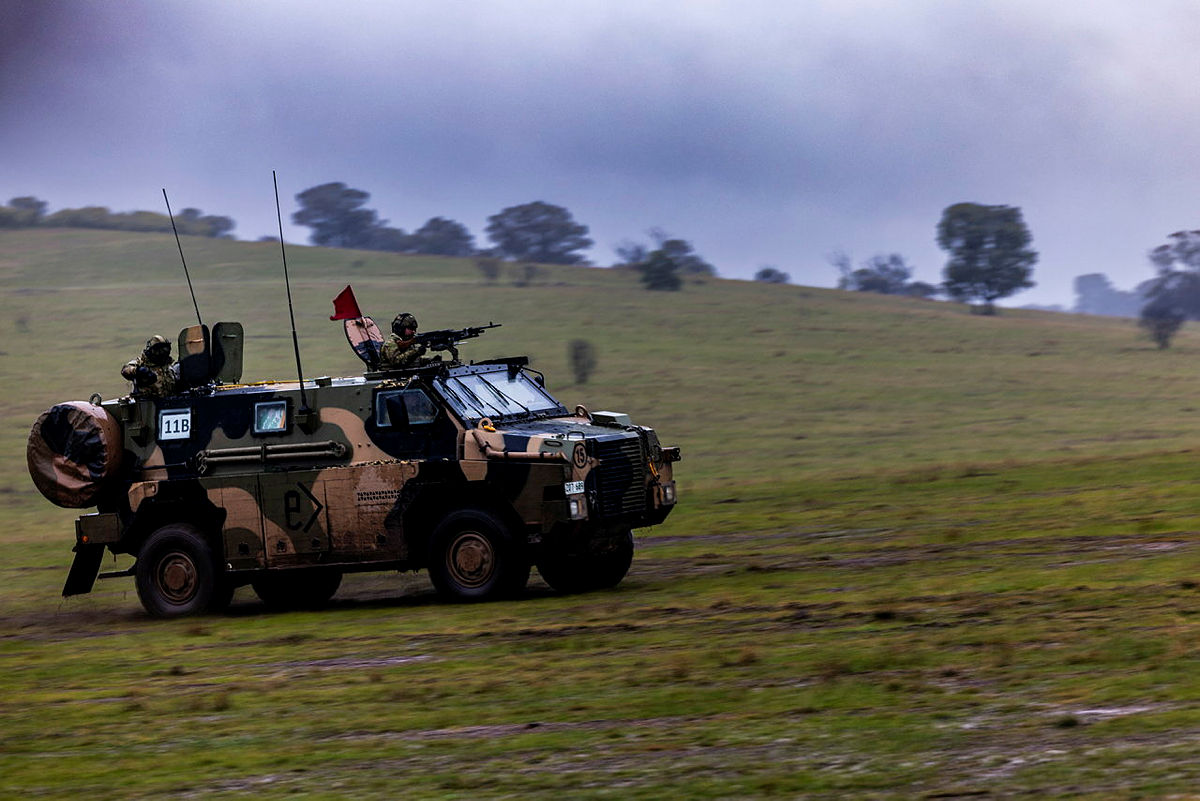
40+ Bushmaster Protected Mobility Vehicles to be Built in Bendigo
The Government will build more than 40 Bushmaster Protected Mobility Vehicles, locking in over 250 local jobs in Bendigo and continuing its commitment to defence and a future made in Australia.
Thales Australia will build the Bushmaster vehicles in Bendigo, continuing the city’s more than two-decade history of producing the iconic vehicles that have seen service around the world.
The contract, valued at more than $100 million, will support hundreds of jobs in the local economy and many more jobs across the supply chain in Victoria.
These additional Bushmasters would be used by the Army’s second long-range fires regiment, to be based at the Edinburgh Defence Precinct in South Australia as part of the 10th Fires Brigade. The vehicles will support a multi-mission phased array radar battery to provide critical command and control functions.
|
|
|
|
|
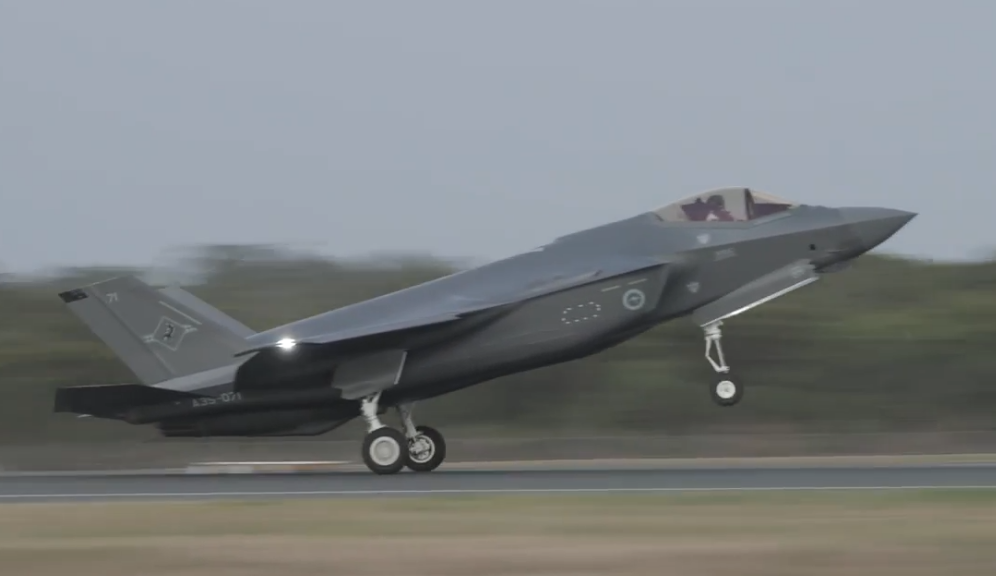
Delivery of the Final Nine of Australia’s Fleet of 72 F-35A Lightning II Aircraft
The delivery of the final nine of Australia’s fleet of 72 F-35A Lightning II aircraft underscores the Government’s commitment to keeping Australia safe by ensuring the Australian Defence Force (ADF) has what it needs to defend our nation.
Defence has undertaken the rapid introduction of this important capability since the first two F-35A Lightning II aircraft arrived in Australia on 10 December 2018.
The F-35A aircraft fleet, in conjunction with the EA-18G Growler and F/A-18F Super Hornets, are the cornerstone of Australia’s air defence and strike capability, as outlined in the 2024 National Defence Strategy. As a multi-role fighter, the F-35A can perform air-to-air and air-to-surface missions, and utilise stealth technology, electronic protection, electronic attack and advanced countermeasures to maximise lethality and survivability.
The arrival
of the final nine aircraft also demonstrates an enhancement of the warfighting capability of Australia’s F-35A fleet, with these aircraft the first in the fleet to receive Technology Refresh 3, enabling Block 4 upgrades that will support the new and enhanced capabilities required to meet the evolving threats of the future.
This important milestone concludes a year in which accelerated capability delivery for the ADF was pushed to the forefront with the elevation of the Defence Industry portfolio to Cabinet.
ADF capability delivery over the course of calendar year 2024 includes:
- Three new missile types fired from Navy ships for the first time, including the Tomahawk guided missile, Standard Missile 6 and the Naval Strike Missile.
- Construction commenced on the first Hunter Class Frigate;
- Two shipbuilders were selected to progress designs for Australia’s general-purpose frigate, a new program announced in 2024 following the recommendations of the Surface Fleet Review;
- The Navy took delivery of the first prototype of Ghost Shark, an autonomous robotic undersea vehicle;
- A ship design was selected for the new Landing Craft Heavy;
- 46 new M1A2 Abrams main battle tanks were delivered for use by the Army;
- 7 new UH-60M Black Hawk helicopters were delivered to Australia from the United States, taking the total of Australian Army Black Hawk helicopters to 10. More helicopters will be delivered in 2025;
- Construction work began on a $200 million deep maintenance facility at RAAF Edinburgh for the ADF’s Boeing 737 variants;
- Australia took possession of its first Triton remotely piloted aircraft system, delivered from the United States;
|
|
|
|
|
|
|
|
|

Unsolicited Project Pathways -
Current Focus: Kinetic Capabilities
Throughout the year, the Manufacturing Capability Expansion and Investment Prioritization (MCEIP) office will be accepting unsolicited project submissions from DIBC members for key focus areas of interest under specific critical sectors.
Key Points for Consideration:
Current Focus: Kinetic Capabilities (closes January 30 at 5:00pm ET)
- Kinetic Capabilities (UPP-KIN-25-01): Includes current missile and munition systems; advanced and developing missile capabilities, including hypersonic weapons technology; as well as Counter- Unmanned Aerial/Aircraft Systems (C-UAS) and Directed Energy (DE) weapons.
- ICAM and DPAP have interest in hypersonic weapons technology for the boost glide as well as air-breathing cruise missile systems. Areas of interest includes
systems, subsystems, components and subcomponents, or constituent materials for hypersonic systems, to include composite materials and fibers related to missiles, munitions, and hypersonic weapons.
- ICAM has an interest in Counter- Unmanned Aerial/Aircraft Systems (C-UAS) and Directed Energy (DE) weapons, to include systems, subsystems, components, and sub-components. Submissions in these two areas should be focused on the IBAS priorities described in section 1.3 of the UPP Guidance.
- Additional DPAP areas of interest for missiles and munitions include:
- Control Actuation Systems (CAS) to precisely position control surfaces to provide flight control in response to guidance commands
- Antennas includes those used in. guidance, navigation, control, tracking, and critical flight termination processes
- Precision Ball Bearings used for a variety of systems for missiles and munitions
- Specialty steel manufacturing that is used for precision ball bearings for missiles and munitions components and subcomponents (M50, 52100, 440C, BG-42, as well as 4340, M50 Nil, M62, and XD-15 steels).
- Submissions in these areas should be focused on the DPA Title III criteria described in section 1.3 of the UPP Guidance.
- Kinetic Capabilities (UPP-KIN-25-02): Includes critical chemicals and their precursors, polymeric materials, metals and minerals used in defense applications, as is or as part of energetic formulations that go into explosives, propellants, and pyrotechnics.
|
|
|
|
|
|
|
Defence is delivering targeted outreach sessions in preparation for the end of the compliance transition period on 1 March 2025 for the new controls . These include:
- Virtual drop-ins: A series of weekly 30 minute webinars focused on key topics and with opportunity for questions.
- Information sessions: Virtual deep dives tailored by sector (industry, higher education/research, and Defence).
- In-focus roadshows: A series of in-person events across Australia targeted to persons responsible for compliance. Events will be arranged according to demand and an invitation with session times will be sent closer to the
date.
|
|
|
|
|
|
|
Round 2 Opening 15th January 2025
Round 2 of the Critical Technologies Challenge Program will open for applications 15 January 2025 and will close on 26 February 2025.
Grants from $100,000 to $500,000 for a Stage 1 Feasibility project are available. If your Stage 1 Feasibility project is successful, you may receive up to $5 million for a Stage 2 Demonstrator project.
The grants are for consortia that include at least one Australian industry-based partner and one Australian research organisation.
The program provides consortia with funding to develop quantum technology solutions or a component(s) that contributes to a solution for market-led challenges of national significance. Solutions may also involve the use of other advanced technologies such as artificial intelligence and robotics.
The challenges are:
- Challenge 1: Improve biosecurity outcomes by enhancing the detection of invasive pests or diseases, and cargo inspection processes.
- Challenge 2: Improve life expectancy, health outcomes and access to health technology for First Nations peoples.
- Challenge 3: Optimise transport routes, logistics and supply chain operations.
- Challenge 4: Optimise the performance, sustainability, and security of energy networks.
There will be two grant opportunities as part of this program.
Stage 1 – Feasibility grant opportunity
The purpose of the Stage 1 Feasibility grant is to test and demonstrate the technical viability of your proposed solution or component(s) of a solution.
Stage 2 – Demonstrator grant opportunity
The purpose of the Stage 2 Demonstrator grant is to support you to build on your Stage 1 Feasibility project and produce working prototypes or demonstrations.
Only applicants that complete a Stage 1 Feasibility project will be invited to submit an application for Stage 2 Demonstrator funding.
|
|
|
|
|
| In Case You Missed These Announcements!
|
|
|
|
|
|
|
|
|
|
|
AUKUS Licence Free Environment
Under the Defence Trade Controls Amendment Act 2024 (DTC Amendment Act), Australia has established a licence-free environment to promote strategic collaborations with our Australia, United Kingdom, United States (AUKUS) partners.
The licence-free environment exempts certain Defence and Strategic Goods List (DSGL) goods technology, services from permit requirements when transferring between Australia, the United States and/or the United Kingdom.
|
|
|
|
|
|
|
The JOSCAR-AU system was established following an initiative led by a growing number of prime contractors as registered buyers together with the Commonwealth Government.
JOSCAR-AU is a cross-sector collaborative solution that reduces the time, cost, resources and duplication currently needed to provide information to major prime customers. Holding common supplier information in a central system, the JOSCAR-AU accreditation system allows information to be accessed by all participating buying organisations.
JOSCAR-AU is designed to make the process of pre-qualification or accreditation as efficient as possible – saving your company a significant amount of the time, effort and cost associated with working for multiple clients.
Hellios enables more effective compliance with client requirements for business through a single process. Your initial registration will determine the level of pre-qualification or accreditation that your clients require, based on an automated risk profile.
Expert advice is provided throughout the process to guide you including identifying potential business improvement opportunities that may increase your competitive advantage.
Registration on JOSCAR-AU is either by invitation from your registered JOSCAR-AU buyer or via self
nomination. If your buyer has asked you to complete the JOSCAR-AU questionnaire, they will contact Hellios directly on your behalf. Hellios will then process this request and send a link to the questionnaire for you to complete. If you would like to self nominate, please reach out at joscar@hellios.com.au.
|
|
|
|
|
|
|
|
|
|
|
BAESA/GAP Industry Training: Estimating For Defence
BAE Systems Australia and the Global Access Program are pleased to once again offer Estimating & Pricing Industry Training during 2024.
Delivering competitive and defendable proposals for Defence requires a variety of estimating techniques to build robust, credible and defendable Basis of Estimates. Learn how to challenge your cost base, supplier quotes, estimates and price, and submit a compliant proposal that meets customer requirements, represents value for money, and can survive a cost investigation.
Estimating For Defence is a two day course developed by Estimating & Pricing (E&P) at BAE Systems Australia, and delivered in partnership with the Global Access Program (GAP).
|
|
|
|
|
|
|
|
|
Open to Industry partners Based in Australia, Canada, and the UK
The Defense Industrial Base Consortium (DIBC) aims to coalesce and expand the defense industrial base (DIB) in support of the Manufacturing, Capability Expansion, and Investment Prioritization Directorate (MCEIP) critical sectors and additional areas of interest. To align with the recent modification to the definition of Domestic Source for Title III of the Defense Production Act, and in keeping with the MCEIP vision of delivering a resilient U.S. supply chain and workforce able to respond in times of national security crisis, DIBC is excited to announce that we are opening membership to Industry partners in Canada, the United Kingdom, and Australia. This increased level of collaboration will aid the DIBC in achieving MCEIP’s
mission and vision.
The application to become a DIBC member can be found here. International members will need to apply for a NCAGE Code and UEI prior to joining DIBC. To apply for a NCAGE code, each organization will need to register at https://sam.gov/. Instructions on how to register can be found here.
If you have questions about the application process, please feel free to reach out to dibconsortium@ati.org.
|
|
|
|
|
|
|
Australia’s national science agency, CSIRO, has announced a $20 million investment to provide small to medium enterprises (SMEs) with greater access to vital research and development (R&D) opportunities to accelerate their growth.
The funding will allow CSIRO’s SME Connect team to support up to 750 SMEs through a range of programs and initiatives that provide facilitation, training, dollar-matched funding and support to start-ups and SMEs seeking to engage in company-led research projects.
One of the programs being supported is SME Connects flagship program, CSIRO Kick-Start. Since its inception in 2017, the Kick-Start program has facilitated over 280 company-led R&D
projects, with alumni companies collectively holding a market value exceeding $2 billion.
Dr Doug Hilton, CSIRO’s Chief Executive, emphasised the significance of this investment and the transformative impact it would have for Australia’s critical SME sector.
|
|
|
|
|
|
|
The Victorian Land Systems Fund – Supply Chain Uplift Program will support Victorian defence industry businesses to work with Hanwha Defense Australia (Hanwha) as part of its supply chain. The program will help build
businesses’ capabilities so they can help Hanwha deliver the Commonwealth Government’s $1 billion Land 8116 Self-Propelled Howitzer program.
Funding will support eligible Victorian businesses to:
- gain relevant accreditations and meet industry specific compliance requirements
- prepare tenders
- undertake minor facilities upgrades and equipment fit outs
- develop new or enhance current defence products or services
- undertake defence R&D
- participate in trade missions to pursue collaboration and export opportunities.
Businesses must engage with Hanwha and receive its support before applying.
Applications to the Victorian Land Systems Fund Supply Chain Uplift Program are now open and close on 30 June 2024 or until funds have been exhausted.
|
|
|
|
|
|
|
Defence Industry Development Grants Program
The Defence Industry Development Grants Program (the program) will award grants over four years from 2024-25 to 2027-28. The program was announced as part of the Defence Industry Development Strategy.
The objective of the program is to build the industrial base Australia needs to achieve Defence outcomes in areas of strategic priority.
The Defence Industry Development Grants Program funds four distinct grant opportunity streams tailored to address the program outcomes:
- Sovereign Industrial Priorities
- Skilling
- Exports
- Security.
These four grants opportunities will be assessed in batches. We will regularly update the closing dates for each batch on this page. You can apply at any time.
All projects are due to be completed by 31 Mar 2028.
About the streams
The Sovereign Industrial Priorities stream will assist eligible small to medium enterprises (SMEs) to purchase manufacturing plant and equipment which is used directly to develop and/or deliver programs that are in line with the Sovereign Defence Industrial Priorities (SDIPs) described in the Defence Industry Development Strategy.
The Skilling stream helps Australian defence industry to upskill and train in priority trade, technical and professional skillsets to develop a workforce with the right mix of qualified and experienced personnel to meet Defence requirements. The program will enhance the capacity and capability of Australian defence industry workforce to deliver SDIPs described in the Defence Industry Development Strategy.
The Exports stream provides support for small to medium enterprises (SMEs) to overcome export barriers and help defence industry build scale and competitiveness in defence capability priority areas as identified by the SDIPs described in the Defence Industry Development Strategy.
The Security stream helps Australian defence industry improve and maintain security in priority areas as identified by the SDIPs and in line with the Defence Industry Security Program.
|
|
|
Industry Growth Program - Support for Innovative SMEs to Commercialise and Grow their Business
The program supports innovative small and medium enterprises undertaking commercialisation and/or growth projects within the National Reconstruction Fund priority areas through advisory services and opportunities for matched grant funding. Minor changes or improvements to existing products or services are not considered innovative.
You will be connected to an Industry Growth Program Adviser who will provide tailored advice to support your commercialisation and/or growth project.
Once you have received this advice, you may also be able to apply for:
- grants of $50,000 to $250,000 to support early-stage commercialisation projects
- grants of $100,000 to $5 million for commercialisation and growth projects.
More info >
|
|
|
|
|
Australian Space Industry Capability Database
The Australian Space Industry Capability database will open for industry submissions from mid-July. Companies can upload information on their:
• Location
• Capability
• Workforce
The database has been developed by SIAA and is supported by the Australian Trade and Investment Commission (Austrade), the Australian Space Agency, the Office of Defence Industry Support and SmartSat CRC.
|
|
|
|
|
|
|
Australia Partner Network
Leidos Australia is focused on working with Australian Industry for delivery of all of our projects. We know the importance of supporting the growth of sovereign capability and would like to work with more Australian businesses at all stages of our delivery lifecycle.
We encourage Australian companies, who are interested in working with us on the opportunities identified above or on other business requirements as they arise, to complete the following registration form.
In your submission, you should highlight your experience with any relevant Defence, Intelligence, ICT and cyber capabilities and technologies. Our team will then be in touch to identify potential next steps.
|
|
|
|
|
ODIS provides a range of grants to support defence industry businesses. These grants help Australian small and medium enterprises grow to meet Defence capability needs and join global defence industry supply chains.
The ODIS Defence Business Readiness Tool (DBRT) is a platform used by our Industry Engagement Team to assess the Defence Readiness of Australian Small and Medium Enterprises. The DBRT is the first step in the journey to becoming a supplier to Defence.
To use this secure tool you must have an account. You can either sign in with an existing account or create a new one. You will need to provide your Australian Business Number (ABN) when registering your account. Get Defence Ready with DBRT 2.0 and unlock the true potential of your SME within the Defence industry!
|
|
|
|
|
|
|
AusTender provides centralised publication of Australian Government business opportunities, annual procurement plans and contracts awarded.
|
|
|
|
|
|
|
Grants and Programs Finder
If you’re doing business in Australia, this guided search will help you find grants, funding and support programs from across government.
|
|
|
|
|
|
|
Here is a link to the ICN Gateway where you will find major Government and Defence work packages
|
|
|
|
|
|
|
|
|
|
|
|
|
Is your business looking to sell to the Australian Government? The newly updated Selling to Government website has all the information and support you need to get involved in government procurement and contracting opportunities. Find out more > |
|
|
|
|
| Domestic Event & Exhibitions
|
|
|
|
|
|
|
|
|
|
|
|
|
|
|
|
|
|
|
|
|
|
|
|
|
|
|
|
|
Australian Defence Alliance Victoria Inc.
570 Bourke Street
Melbourne Victoria 3000
Australia
|
|
|
|
|